Thursday, November 4, 2010


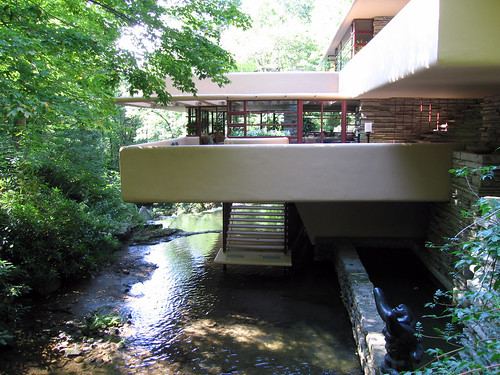
Frank Lloyd Wright is an American Architect whose work goes beyond the structure itself but extends to the surrounding area in which it is built. His buildings incorporate the individualistic nature of the land into the building so that both land and building become a unified whole. An example of this is in his work titled “Fallingwater” were he built a multi-story house over a waterfall. The interior of the house has a river running through it. The stones that were used in the structure are actually taken from the riverbed.  


Thursday, October 28, 2010

Propaganda


The amount of influence and power art has in a time of war is crucial in developing a means to control the populace’s perception that war is just by caricaturizing the enemy as evil. This is clearly seen in World War II, where the Axes and Allies were both using the power of propaganda imagery to win the support of their people. Because of propaganda’s ability to both contort and warp an individual’s perception of what they would normally see as wrong, it can be an extremely dangerous weapon that could be abused in order to justify an evil or immoral act.  

The example above is a piece of German Propaganda art from World War II. Looking at the image alone we can see a German soldier striking down a dragon with bolts of lightning. If we are to look closer, we see that the dragon has a star (and/or pentagram) on its forehead. The soldier’s pose of standing over the dragon seems to signify the final blow, but his hands are reaching not for a gun but upward, as if the finale act of killing the dragon is graced by divine favor.

The symbol of the dragon is prevalent in the book of Revelations in which it states "And there appeared another wonder in heaven; and behold a great red dragon, having seven heads and ten horns, and seven crowns upon his heads" (Revelation 12:3). It appears that the artist is trying to connect the Biblical metaphor of the Red Dragon, also known by other names such as Beast, Apollyon, Abaddon, Accuser, Adversary, Satan exc., to that of their enemy.

During World War II the United States used a five pointed star insignia for their military aircrafts and vehicles. In the poster above this same insignia is seen on the vanquished dragon’s head. Because of this, the artist’s insinuation of America as the great evil is clearly defined. Furthermore, if we look into any mythology, whether it is Greek, Maya, Norse or even Native American we can clearly see lightning as a divine weapon used to carry out a god’s wraith.

Moving on to the text, it translates to “Germany’s Victory, Europe's Freedom”. These four words put on a nice view of Germany’s attack on other European countries as a defensive battle that must be won to insure the freedom of all. This twisted view of the war casts Hitler’s Nazi Germany not as the tyrannical foreign oppressors they were, but as defenders of Europe’s liberty.    

The final thing to look into is the grenade in the soldier’s hand. This seems to translate into self-sacrifice, for why else would a man that close to his enemy choose to use a grenade if there was not enough time to escape the blast? The message in the end is that Germany must be willing to sacrifice all in order to achieve victory over America, a country controlled by the powers the Red Dragon, in order to insure the freedom of Europe.

Thursday, October 21, 2010

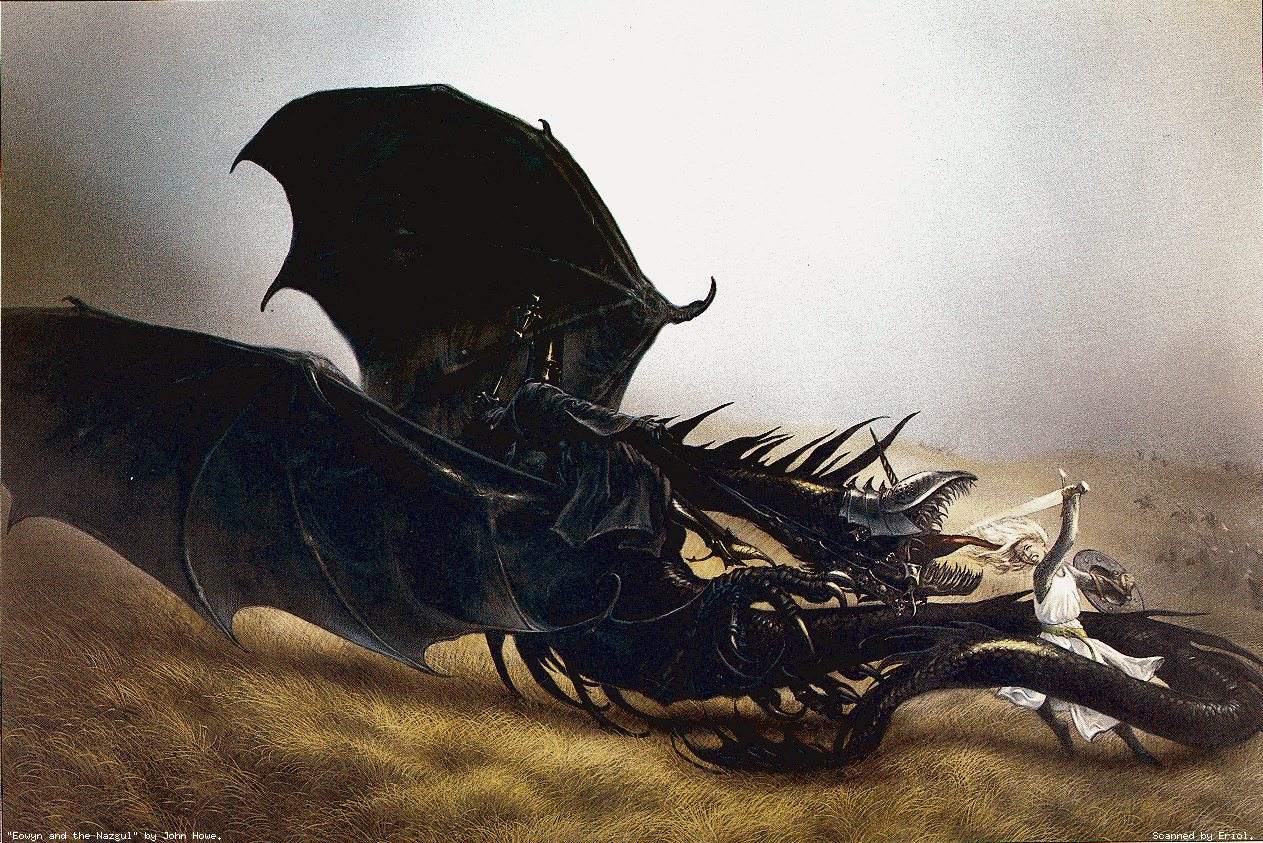
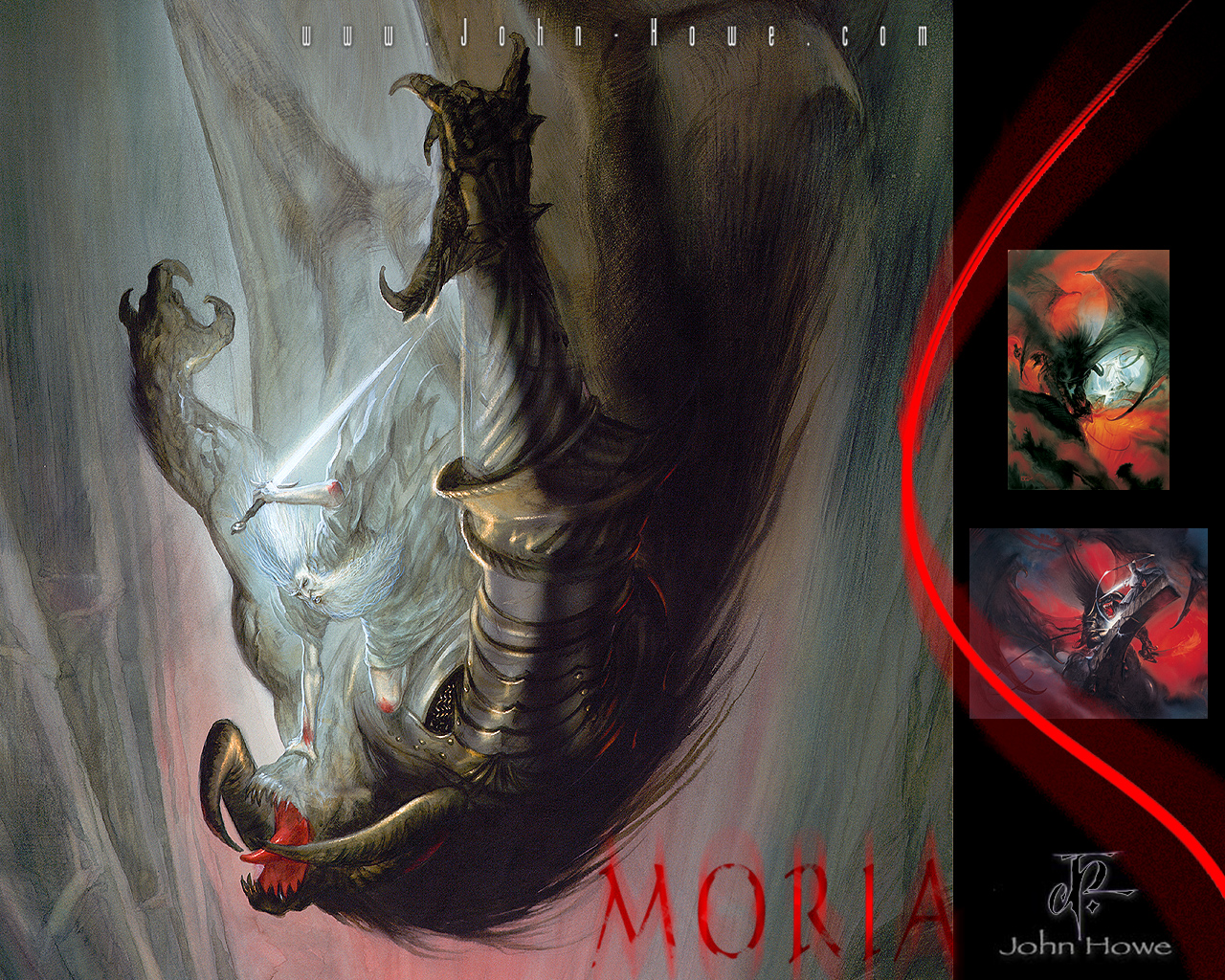
My artwork is a combination of fantasy and the abstract. The two artists that contributed to my artwork would be Jimmy Ernst, an Abstract Surrealist painter, and John Howe, a fantasy Illustrator and painter. Here are some examples of their work:

John Howe

John Howe
John Howe

John Howe


Jimmy Ernst
Jimmy Ernst
Jimmy Ernst


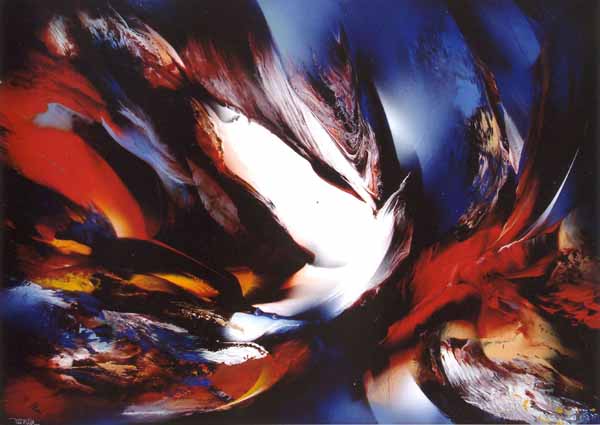
Leonardo Nierman’s painting entitled “Birth of Lightning” uses an explosive combination of hot and cool colors. The vibration and noise that these colors produced drew me into the painting immediately. Though the painting is abstract, the title triggered me to think of the Big Bang theory that is believed to have  ignited the universe into being, or of the ancient Greek mythological tales of Prometheus’ gift of fire to man. 


The radial symmetry of the painting’s design is another factor of its beauty. It unifies the bright oranges, reds and yellows with the darker blues and greens. The pitch black spaces within the painting also help create a sense of depth that guides the viewer’seye through the entire piece, starting from the upper right-hand corner, to the center, and finally ending at the upper left-hand side were the black is centralized.
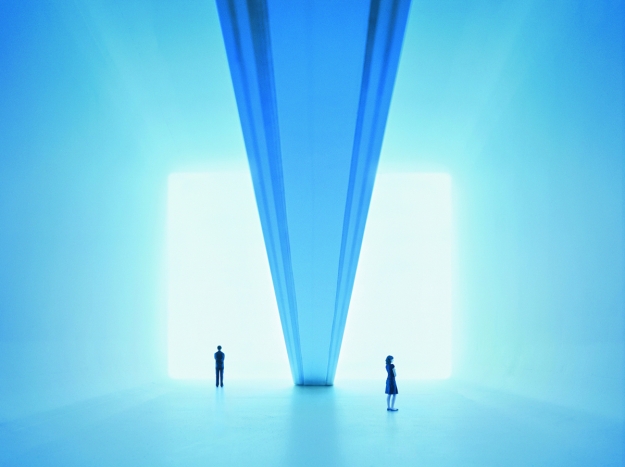
            James Turrell is an American Installation artist whose primary focus is on light and space. His works are unique in that his use of light creates an illusion of solidity where there is none. In most art work, light is only an element of the work that creates what we see as value. Though light is everywhere, it is often never seen as a separate entity. Turrell’s artwork succeeds in isolating and confining the light into an area so that it is transformed into something with both form and weight. 


         James Turrell is currently working on his largest project, Roden Crater. The observatory within the center of the crater, a former volcano, is a modern day form of Stonehenge. This sublevel temple-like structure has tunnel systems that open up to the sky. These tunnels guide the light from the earth’s sun, stars, and moon into the atrium where a person can view them without any reference to the horizon or landmarks. The effect of isolating the viewer form any points of reference creates the feeling that it is not the stars that are moving but the viewer himself. 


Jabez Malmude
October 6, 2010

1.         Anna Hepler’s series of 20 cyanotype prints on aluminum are unique in that the prints seem to be made out of solidified light. Each of these prints has a life of their own. Each resembles some type of higher ethereal beings that have somehow managed to stay in place long enough so that we “mere mortals” can see these strange, and otherworldly impressions of their forms. The artist, Helper, uses the monochromatic blue throughout the prints, creating the effect of light formations lifting off of the surface and extending outward from the wall.

Image 1
Image 2


2.                  Another one of Helper’s works, a much larger luminescent installation located directly in the center of the museum lobby, was completely constructed out of recycled sheet plastic and extends from the ceiling down to the floor. This mammoth sculpture is around 40 ft high and like her prints, is constructed out of individual strands that crisscross to form a kind of cocoon like being. The structure is built around a light source which creates a dynamic effect at the base of the piece. The netting seems to be multi-layered to allow for change in lighting throughout the structure.